How To Beat The Heat And The Hidden Sleep Crisis Hitting Holidaymakers This Summer

Sleep disruption is one of the most common, but often underestimated challenges of travel, particularly when journeys coincide with hot weather and across different time zones. Soaring nighttime temperatures, unfamiliar environments, and circadian misalignment – even when taking short haul flights – can collectively throw body clocks into chaos, impairing sleep onset, reducing sleep depth, and increasing next-day fatigue. Hot hotel rooms, disrupted routines, late-night screen time and even as little as a two-hour time difference can leave travellers struggling to switch off long after they land.
In order to begin to combat this, it is important to understand the biology of sleep. Sleep is regulated by a neurochemical network of hormones and neurotransmitters (chemical messengers used by the nervous system to transmit messages between nerve cells) such as melatonin, cortisol, serotonin, and dopamine. Understanding these helps to explain why travel disrupts sleep and how targeted support can help restore balance.
Sleep is governed by two interacting systems – circadian rhythm (the body’s internal biological clock that determines the timing of sleep) and sleep pressure (the body’s increasing need for sleep, the longer we are awake). The circadian rhythm is primarily regulated by light exposure and the hormone melatonin, which responds to the signals of the onset of darkness and prepares the body for sleep. Travel across time zones disrupts this rhythm, while hot weather interferes with thermoregulation – a key trigger for sleep onset. When nighttime temperatures remain high, sleep onset is delayed, deep sleep is reduced, and nighttime awakenings increase.
The most common sleep issue when travelling is jet lag, which occurs when the internal circadian clock is misaligned with local time as a result of crossing time zones. Symptoms include difficulty falling asleep, fragmented sleep and early waking, along with daytime fatigue, often with digestive disruption. It’s easy to presume that only long haul travel causes jet lag, but even the time difference from a short haul flight can disrupt the circadian rhythm – particularly when combined with factors like early flights, late nights, or hot climates.
The body’s internal clock is tightly regulated by light exposure and melatonin timing, and when you shift time zones, your internal rhythm does not instantly adjust. Instead, your body may still be operating on “home time,” meaning melatonin release is mistimed (it may rise too early or too late relative to local bedtime). Core body temperature rhythm shifts can also occur, delaying sleep onset, reducing sleep quality, or causing early waking, leading to morning grogginess or afternoon fatigue. Research suggests the circadian system typically adjusts at a rate of around one hour per day, which is why even a two-hour time difference can mean your body takes several days to fully re-align.
Effective sleep – not just when travelling, but even when it’s hot and humid at home – requires a multi-layered approach:
1. Set A Schedule: Maintain a consistent sleep schedule, ensuring light exposure is properly managed, and keep hydrated.
2. Dress To Rest: Avoid synthetic or non-porous bedding materials like memory foam or polyester. Swap heavy, high-tog duvets for a lower tog rating or a simple, breathable cotton sheet. When it comes to what to wear, dress in loose, lightweight, moisture-wicking materials like cotton to draw sweat away from the body.
3. Sort The Sunlight: Keep curtains and blinds firmly closed during the day to block out solar heat. Ventilate the room by opening windows in the early morning when the outside air is typically cooler.
4. Take A Shower: Take a warm shower approximately an hour before bedtime. This brings blood flow closer to the surface of the skin, which quickly releases heat and allows the body’s core temperature to drop significantly afterwards.
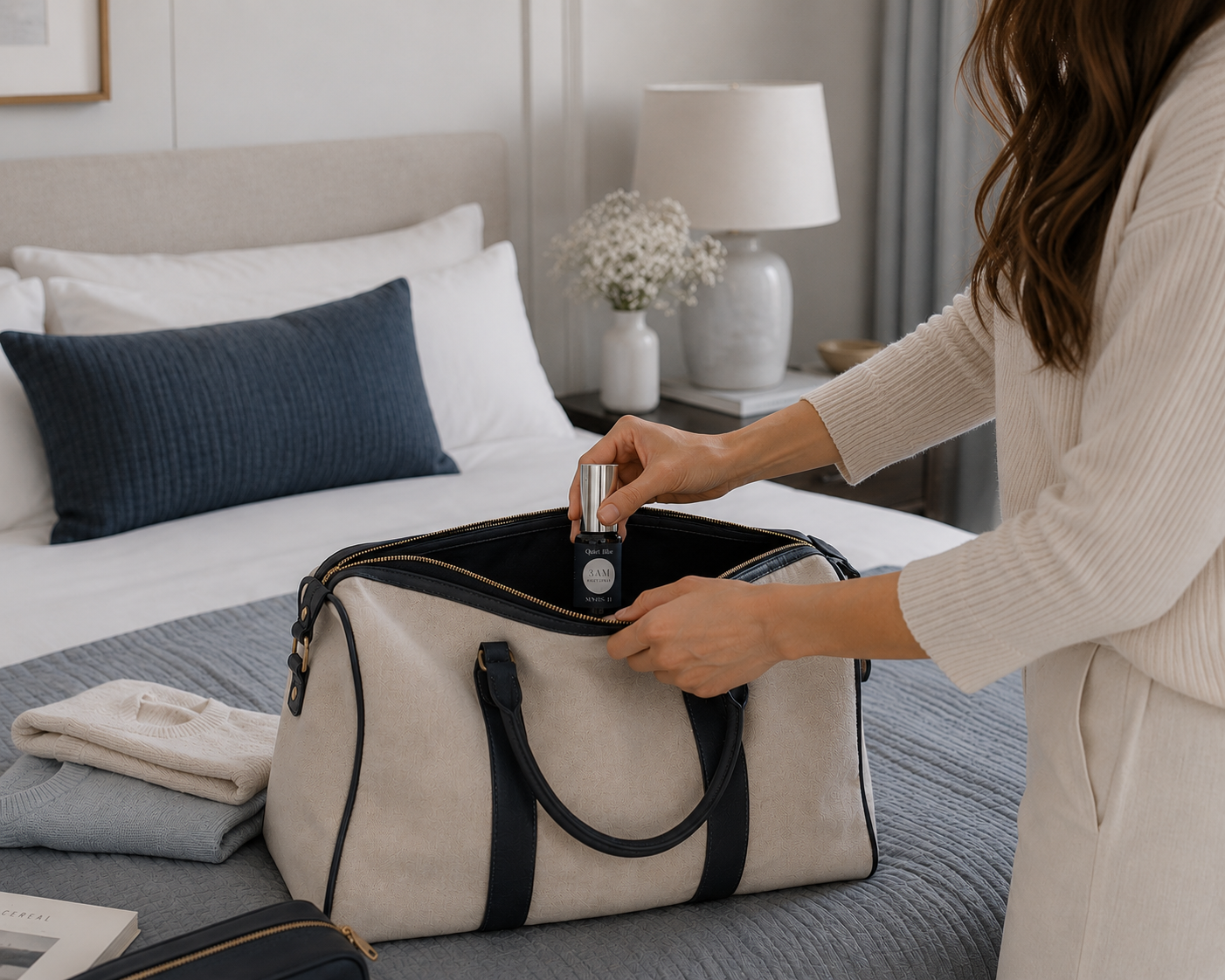
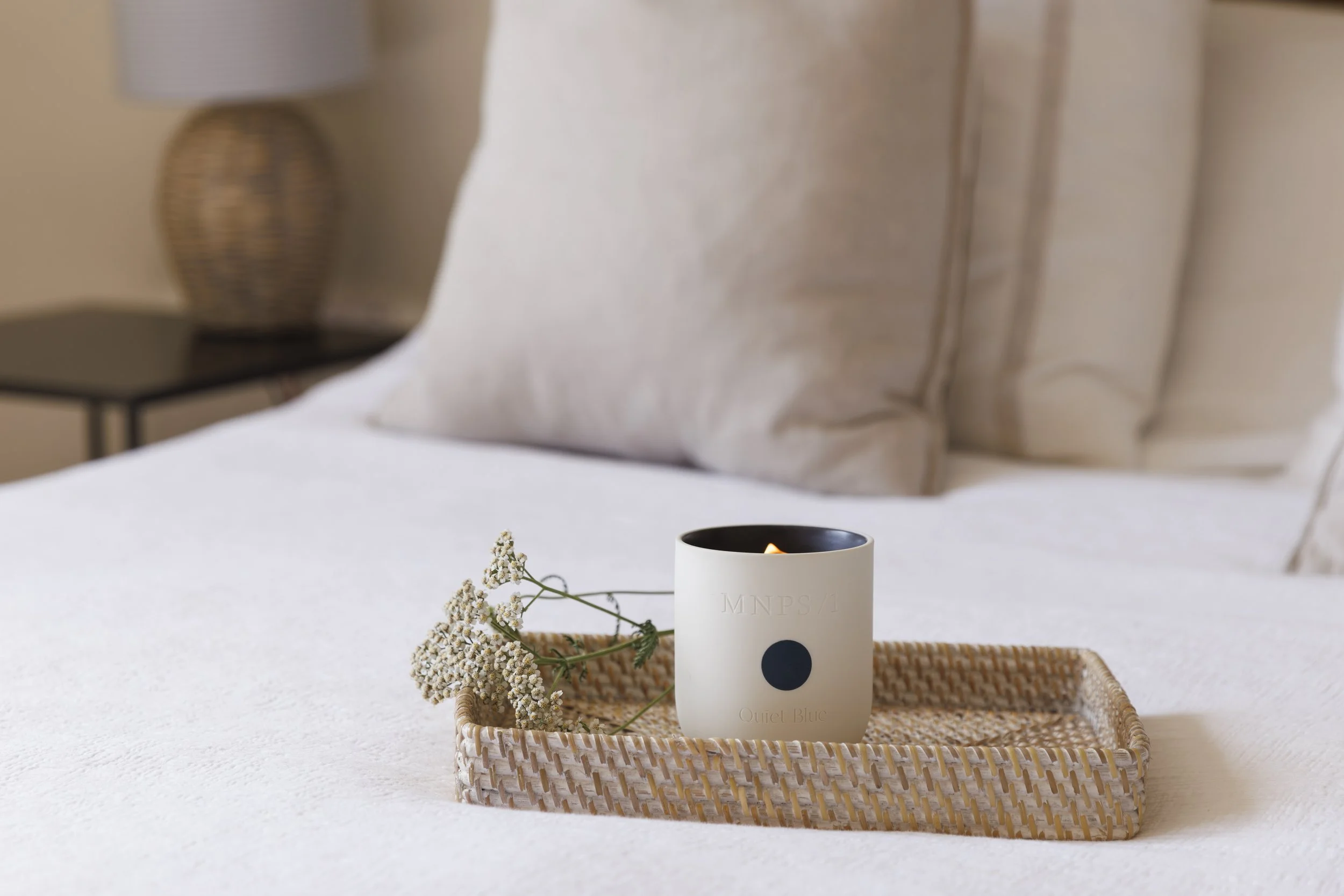
5. Pack Quiet Blue: To help with disrupted sleep, use the MNPS Room Spray by Quiet Blue, made using pure essential oils carefully selected for their scent and unique natural aromatherapy benefits. The 10ml bottle is small enough to fit into carry-on and can be kept at hand on the bedside table. Safe to use as often as needed, upon waking in the night, mist once or twice onto your pillow, into the air, or onto pulse points, to be eased back towards rest. Alternatively, the MNPS Pure Essential Oil helps relieve insomnia by reducing stress and supporting the body’s natural sleep response, in turn promoting relaxation, lifting anxiety, and easing tension. For best results, add a few drops to an electronic diffuser with distilled or filtered water as part of an evening wind-down, and let the soothing aroma help to create a calm and balanced environment before bed. The oil can also be used externally – simply dilute with a base oil to enjoy its nourishing benefits directly on the skin, for targeted relief.